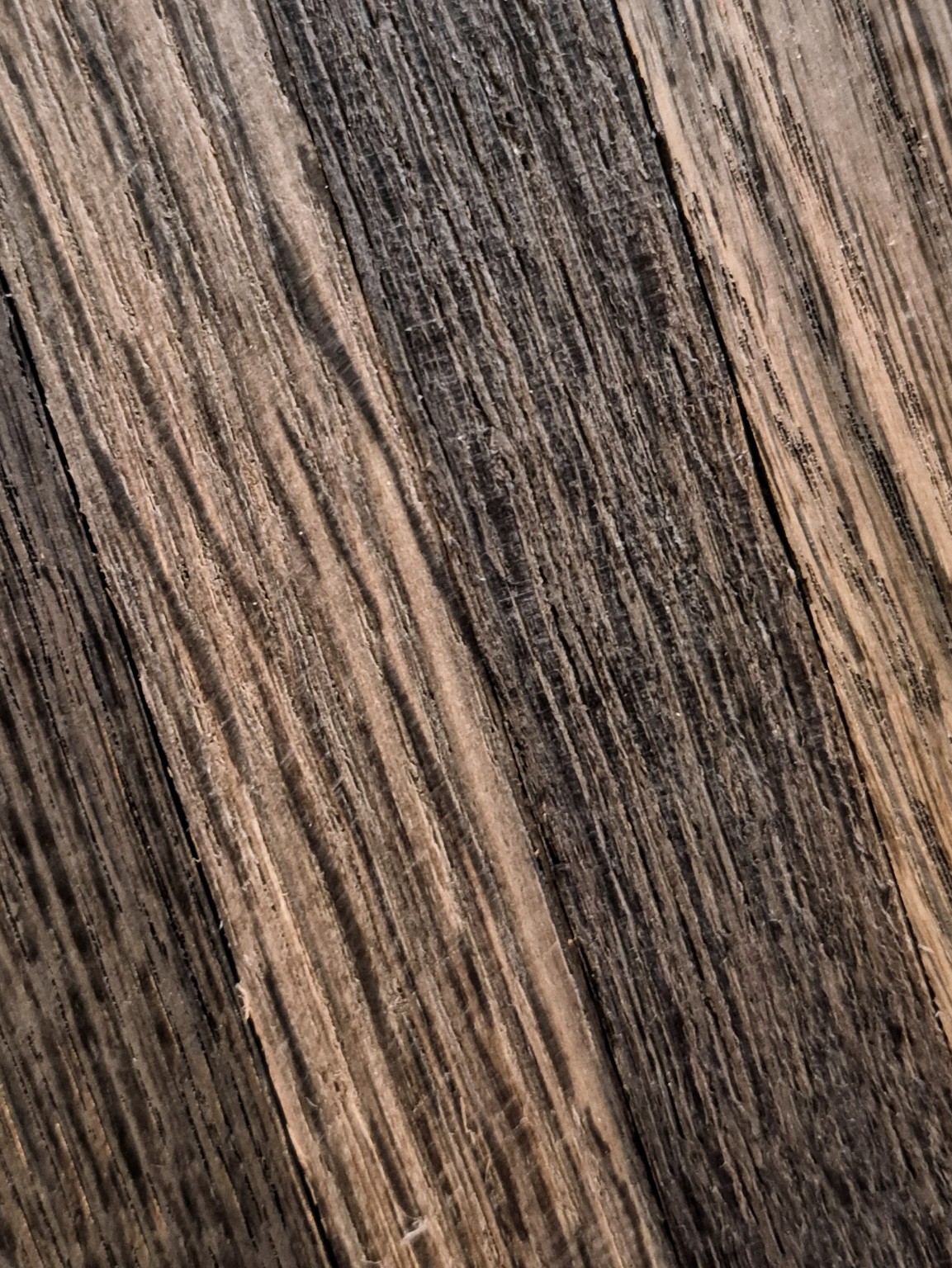
 MOKUREI COLLECTION / ORIGINAL PHOTOGRAPH
Bog Oak
Quercus spp. (often Q. robur)
Deep chocolate to near-black oak transformed by prolonged burial in wet, low-oxygen sediments.
- Botanical family
- Fagaceae
- Average dry density
- 675 kg/m³ (≈12% MC)
- Janka hardness
- 1,120 lbf
- Native distribution
- European peat deposits; recovered subfossil timber
- Grain & texture
- Coarse oak structure; often pronounced medullary rays
Benchmarks shown are for Quercus robur, not a measurement of ancient bog-preserved oak.
Original photograph © Mokurei Studio · timber held in the studio collection. Identification supplied by the studio; physical-property values are literature references, not measurements of the pictured piece.
Material character
Its dark colour arises from long-term reactions involving oak tannins and minerals, not a different species.
Notable applications
Fine furniture, watches, decorative inlays and collectible turned objects.
Of particular interest
Bog oak is typically subfossil wood rather than petrified rock.
Workshop note
Age and botanical species cannot be inferred from colour alone; radiocarbon and anatomical testing provide evidence.